Cerith vs Nassarius Snail: Which Sand Bed Snail Do You Need?
Quick answer
Ceriths are grazers. They eat film algae, diatoms and detritus on the sand, rock and glass, and they burrow a little, which stirs the top of the sand. Nassarius snails are scavengers. They stay buried and race out when food hits the water, eating leftovers and dead matter. They are not algae eaters. Most reefs with a sand bed do best with both: about 1 cerith per 5 gallons and 1 nassarius per 10 gallons to start.
| Cerith snail | Nassarius snail | |
|---|---|---|
| Family | Cerithiidae | Nassariidae |
| Diet | Film algae, diatoms, detritus | Leftover food and dead matter (scavenger) |
| Where you see it | On sand, rock and glass, often at night | Buried, pops out at feeding time |
| Eats algae? | Yes | Not really |
| Needs a sand bed? | Helps, but also grazes rock and glass | Yes, at least about an inch of sand |
| Starting count | About 1 per 5 gallons | About 1 per 10 gallons |
| Shell | Long, narrow spire | Short, rounded, with a long siphon |
Two snails, two jobs
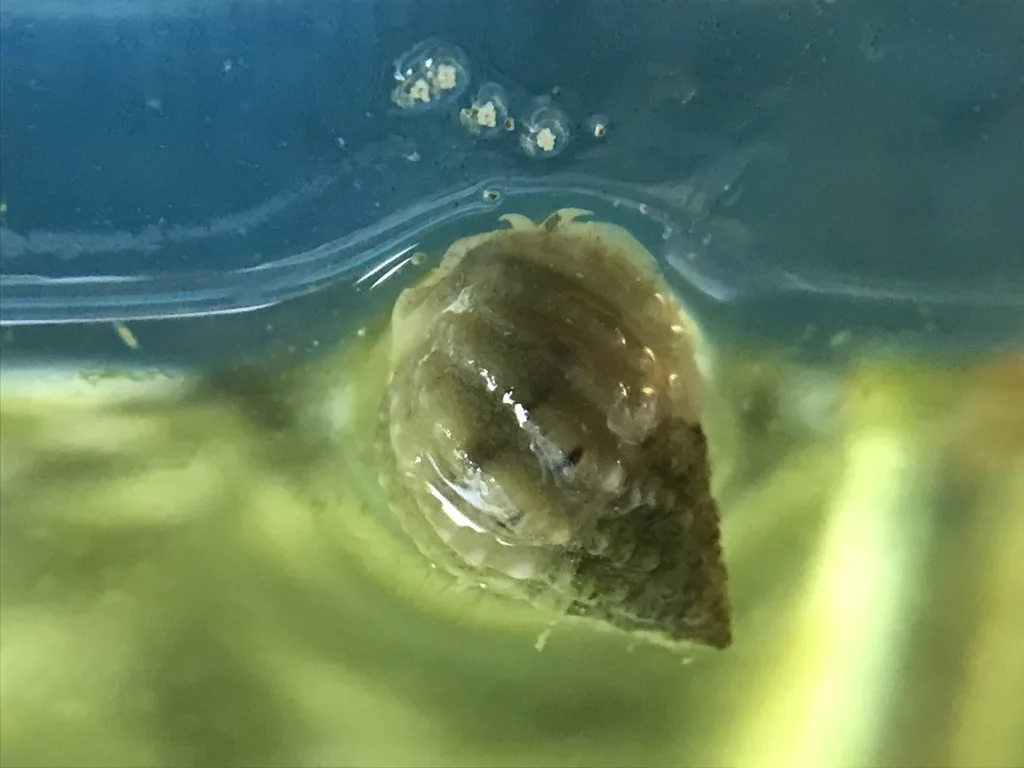
People often lump ceriths and nassarius together as sand snails, but they do very different work. A cerith is a slow, steady grazer with a long, pointed shell. It moves across the sand and rock eating the thin film of algae, diatoms and fine detritus that collects there. When it crawls just under the surface, it turns the top layer of sand, which helps keep it from caking.
A nassarius is a hunter of scraps. It lives buried with only its siphon, a breathing tube, poking up to sniff the water. When food lands, nassarius snails come up out of the sand within seconds and head straight for it. They clean up fish food that falls into the sand before it rots. Scientists group them in the family Nassariidae, which is known for scavenging on dead animals.
Which one fixes your problem?
Look at what your tank is showing you.
- Brown or green film on the sand, diatoms after cycling: ceriths.
- Leftover food sitting in the sand, cloudy spots, a sand bed that smells: nassarius, plus feeding less.
- Film on the glass near the sand line: ceriths, which often climb the glass at night.
- Both: keep both. They do not compete because they eat different things.
Do nassarius snails need to be fed?
In most tanks they get enough from regular fish feedings. Because they eat leftovers, a tank that is fed very lightly or has few fish may not have enough to go around, and too many nassarius in a small tank will starve. If you rarely see them come out at feeding time, or they look thin and slow, drop a small piece of meaty food like a bit of shrimp near the sand. Remove anything they do not finish within an hour.
Sand bed depth
Nassarius snails need sand they can bury in. About an inch of fine to medium sand is a good minimum. In a bare bottom tank, they wander around in the open and often do poorly. Ceriths like sand too, but they also graze rock and glass, so they can work in tanks with only a thin layer of sand.
How many for your tank
These are starting counts for a tank that has finished cycling and has fish being fed. Start low and add more only if the problem keeps coming back.
| Tank size | Cerith snails | Nassarius snails |
|---|---|---|
| 10 gallons | 2 | 1 |
| 20 gallons | 4 | 2 |
| 30 gallons | 6 | 3 |
| 40 gallons | 8 | 4 |
| 55 gallons | 11 | 5 or 6 |
| 75 gallons | 15 | 7 or 8 |
| Adding them to your tank | Add both kinds after the tank has finished cycling and has some film and leftover food for them to find. Float the bag to match temperature, then slowly mix in tank water before moving the snails by hand. Place ceriths on rock or sand right side up. Place nassarius on the sand, and they will usually bury within minutes. Add the rest of your crew over a few weeks rather than all at once. |
Signs your crew is the right size
A good sand crew keeps the top of the sand looking clean and light. You see ceriths working at night and nassarius rising at feeding time. If you start finding empty shells every week, the crew is too big for the food supply or something in the water is off. Test for ammonia, nitrite, salinity and temperature, and do not replace lost snails until you know why they died.
Tank mates
Both snails are reef safe. They do not eat corals, fish or other invertebrates. Their main enemies are hermit crabs, which kill snails for their shells, and fish that eat snails, such as triggers, puffers and some wrasses. If you keep hermits, add a few spare empty shells in different sizes.
Questions
Are nassarius snails reef safe?
Yes. They eat leftovers and dead matter, not corals, fish or living invertebrates.
Why do my nassarius snails stay buried?
That is normal. They come up when they smell food. If they never come up, they may not be getting enough to eat.
Do cerith snails need sand?
They do best with sand, but they also graze rock and glass, so a thin layer of sand is enough.
Can I keep nassarius in a tank without sand?
It is not a good idea. They need sand to bury in.
Will ceriths eat cyano?
Ceriths graze film and diatoms. Cyano is best fixed by finding the cause, such as too many nutrients or low flow.
Related guides
Sources
- Wikipedia: Cerithiidae
- Wikipedia: Nassariidae
- ReefRig: reef clean up crew starting counts
- AlgaeBarn: All about saltwater snails
- Reefstead: reef clean up crew stocking guide
General hobby guidance. Check your state's rules and never release aquarium animals into the wild.